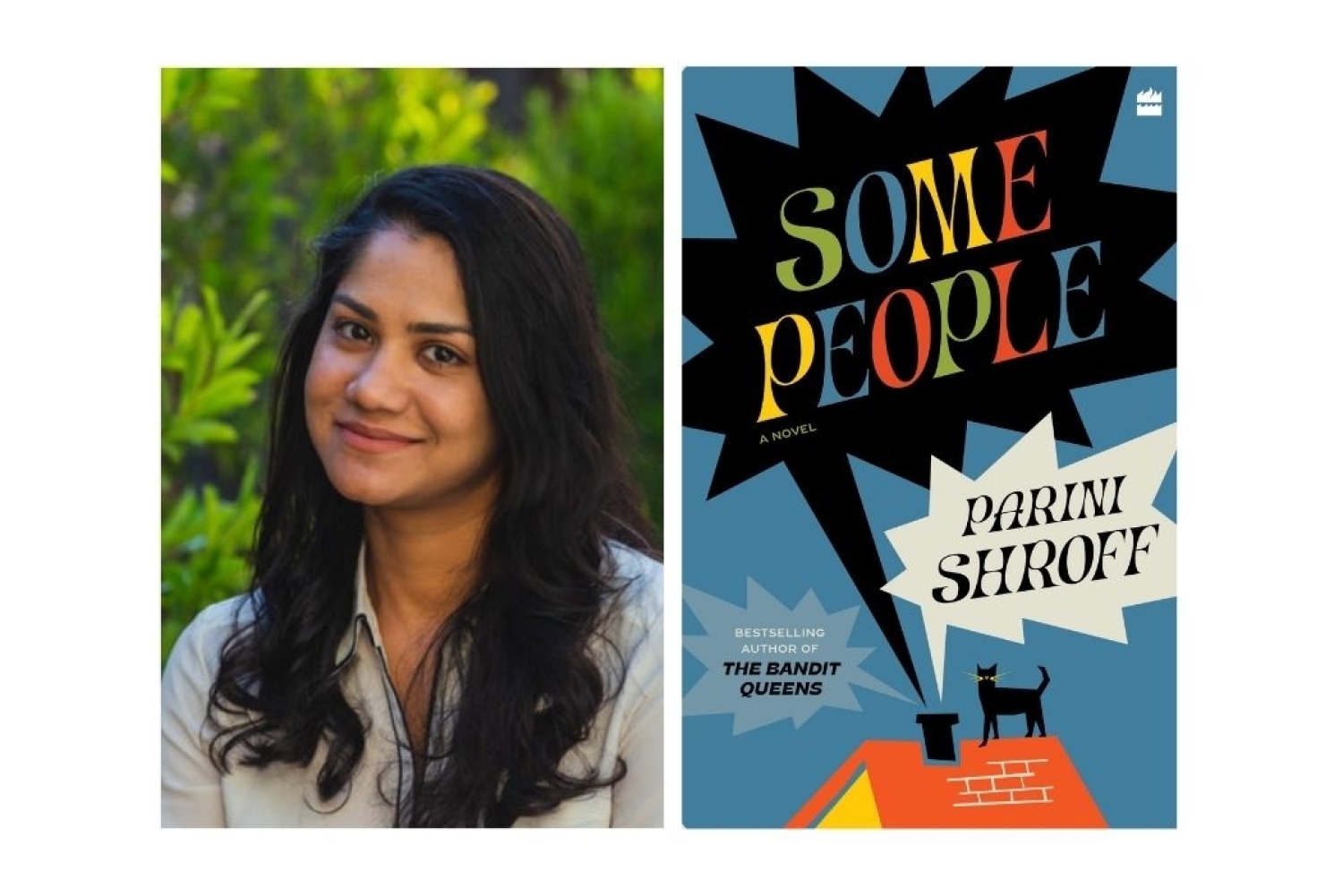
For Parini Shroff, ‘what ifs’ are the driving force behind her writing. Engaged when she began writing Some People, she became intrigued by the idea of in-laws as a forced family we’re meant to envelope into our fold, but are actually strangers. The novel asks what happens when the shared person connecting two such strangers is removed, forcing them beyond polite, chilly niceties and into resentment, trauma, but ultimately, understanding. At its heart, the story follows Nathan and Malti, mother-in-law and son-in-law, as they discover that, despite their different lives and losses, there is room for empathy. In Parini’s words, ‘We don’t have to be, and shouldn’t be, the same in order to connect.’
The Unusual Relationship at the Heart of Some People
I’m engaged and grew intrigued by the concept of in-laws, this forced family we’re meant to envelope into our fold, but are actually strangers. We’re not raised on their ways, and they’re not of us, not really, and often what they owe to you is rooted only in your shared person, the person they created and you married.
When I write, ‘what ifs’ drive me. So I thought: what if that ‘shared person’ is removed? What if, without that mediator, two grumpy strangers are forced to move beyond polite, chilly niceties into the messy quagmire of resentment and trauma, with the hope that understanding waits on the other side?
Creative Process
I’m not certain I get ‘inspired,’ though I admit this novel fell out of me at a rapid clip. I do my part, consistently get my butt in my desk chair, and there are good days and bad days. The ‘good days’ I lose track of myself and feel like a conduit for the work; the characters show me and I follow. ‘Bad days’ are unavoidable, but are a necessary part of the bargain. For me (not everyone!), consistency and discipline are key. It’s like exercising: there’s dread in starting, but afterward, you’re pleased you showed up. Writing and training are linked for me in that way; the more I do it, the more I improve.
Of course, I get stuck with plot holes or character arcs and when that happens, I turn to other stories to give my brain active recovery and hopefully spark a new perspective.
Communicating Forgiveness
That if you can manage it, it’s a gift you give yourself via freedom. Sometimes it’s not possible or, more likely, some people just aren’t interested in its admittedly slow yield and return. In that event, you can fake it until you make it, or do your darndest not to let it infect the other aspects of your life. But fermented resentment is potent and hard to contain. I personally let it out through what I call ‘shower speeches’ a monologue argument delivered to the wall while I wash my hair. I win every time.
Similarities & Differences Between The Bandit Queens & Some People
The dialogue paved the way in both books, though they’re so different at first blush. Most of my work begins with dialogue and I think that’s where most of the humor shines through. The banter, the barbs, the revelations, all that began when Malti and Nathan faced off like boxers in a ring (in my head). It was very similar to the way Saloni and Geeta bickered, and Farah and Geeta bickered, while I wrote The Bandit Queens. A difference between the two experiences would be time. The Bandit Queens’ ending took me so long, I didn’t think I’d ever get there. With Some People, the characters drive the story and that led to a resolution I knew well in advance.
Nathan and Malti
When I began, my initial premise was drastically different people colliding but ultimately reaching understanding. They’re different genders, ages, races, even their first languages are different. While writing, however, all this commonality crept in when they were forced to actually talk. Not just speak, but talk. When they finally felt safe enough to share, that’s when they and the reader realize that while, yes, they’ve led very different lives and suffered different losses, there’s ample room for empathy. We don’t have to be, and shouldn’t be, the same in order to connect. And that’s a truth and hope I especially grasp tight given the current global climate.
What’s Next
Since I’ve gone on and on about the voices in my head, I might as well disclose the latest. While I was editing Some People, the ‘queens’ Geeta, Saloni, and Farah began yammering again. At the time, I needed to focus on Nathan and Malti, but I did not want to lose momentum with the very persistent and vocal ladies, so I pulled out a new notebook and jotted down whatever snippets of dialogue occurred to me. And this revealed a fresh antagonist and conflict that I felt was timely and different enough to warrant a return to their village. Much like Some People, it’s not the novel I had planned next, but it’s the one that was ready to be told.
Words Neeraja Srinivasan
Date 25.8.2026