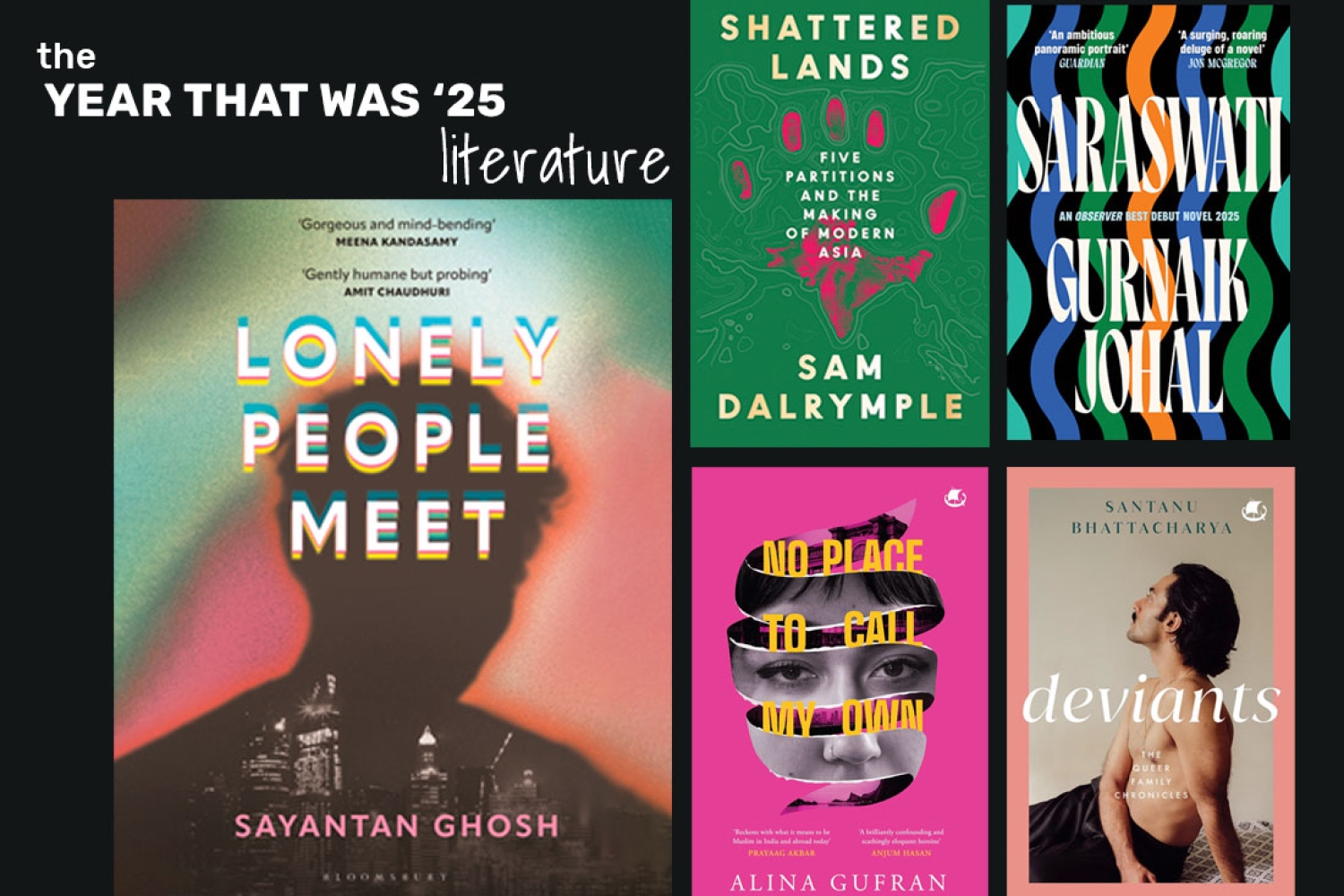
A look at five striking books from 2025 that explore identity, history and contemporary life across South Asia.
Shattered Lands: The Five Partitions of India, 1937–71 by Sam Dalrymple
Sam Dalrymple’s debut offers a much-needed narrative on the histories of people who were once officially Indians. His path to becoming a historian began with childhood travels across South Asia and a formative family holiday to Afghanistan, where stories of Alexander the Great, the Bamiyan Buddhas and the City of Screams revealed a world both familiar and unexpected. The book expands the conversation by tracing five ruptures between 1931 and 1971, drawing from interviews in eight languages.
Deviants by Santanu Bhattacharya
The three stories in Deviants, from the 1970s to today, bring gay men across three generations into focus. It’s a portrait of earlier generations who made the present one possible, as society becomes more accepting of homosexuality. But there are new challenges to this liberation. Using voice notes, diary entries and both first- and third-person points of view, the book illustrates how language, technology and personal tools affect each character’s narrative.
Lonely People Meet by Sayantan Ghosh
Sayantan Ghosh’s debut novel is about Karno, a young would-be novelist, and Devaki, their love on the streets of Delhi blossoming first in stolen moments and silent intimacy before it becomes an all-consuming romance. But the visit of a mysterious man to his door convinces Karno that nothing is as it appears; and before long he is chasing shadows in a dark world where pasts are rewritten and lives manufactured. Against the surreal blend of an ancient history with modernization in Delhi and its mix of the past and the future, it’s a tale that captures a metropolis where one can feel lost.
Saraswati by Gurnaik Johal
Saraswati arises from India’s relationship with its rivers. Worshipped and leaned on, deified but perpetually desecrated. The book sparked with Johal’s obsession with toxic foam on the Yamuna, along which law had been recently extended to grant it human rights, and which led him to Saraswati, long lost and thought to have flowed across the subcontinent.
No Place to Call My Own by Alina Gufran
No Place to Call My Own unfolds in a punchy, intimate first-person voice, plunging readers into the inner world of a young Muslim woman negotiating contemporary India. Inspired by journal-like observations during the pandemic, the book developed around a rich protagonist whose coming-of-age is intertwined with intersecting social movements. Gufran delves into the messy, conflicting psyche of a woman in her 20s: dating, being ghosted, fighting with her mother and discovering her father’s infidelity.
Words Platform Desk
Date 23.12.2025