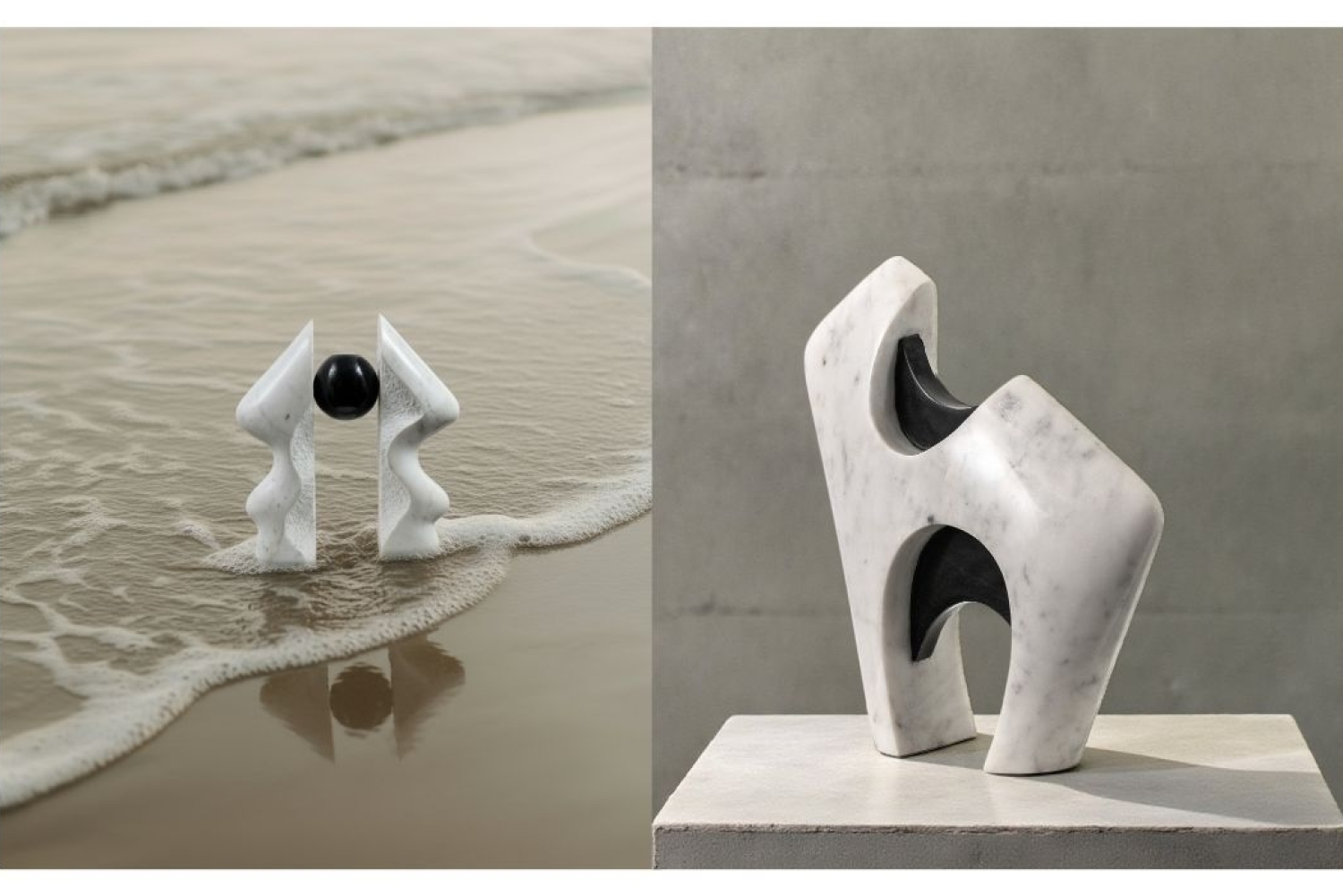
Art Attaichi emerged from Fainy Thakor’s desire to rediscover objects that carried time and held stories, presence, and sculptural life. Founded to revive materials rich with memory, the studio treats tradition as ‘time that has settled’ and the contemporary as ‘time that is unfolding,’ creating works that feel both ancient and present.
Their collection brings that very dialogue forth through sculptural wall pieces, textured brass compositions, and other forms made of wood and stone, and no two designs look alike. These objects take on the form of patinated surfaces, or hammered finishes complete with smooth silhouettes, which gives each of them an organic presence and authentic identity of their own. More below.
The Founding of Art Attaichi
As an architect, I was trained to design spaces with logic, scale, and structure. But outside studios and classrooms, I was always drawn to objects that carried time, the patina on a brass vessel, the lived surface of carved wood, the gesture of a marble detail. I realized these materials held more than surface beauty; they held stories, presence, and sculptural life. Art Attaichi arose from the desire to revive that sculptural value, to allow materials that were once rich with ornament and meaning to express themselves again in forms that feel both ancient and present. The name ‘Attaichi’, a suitcase, became a metaphor for collecting all this: memories, materials, ideas, and then carrying them forward into new objects that feel familiar yet distinctly modern.
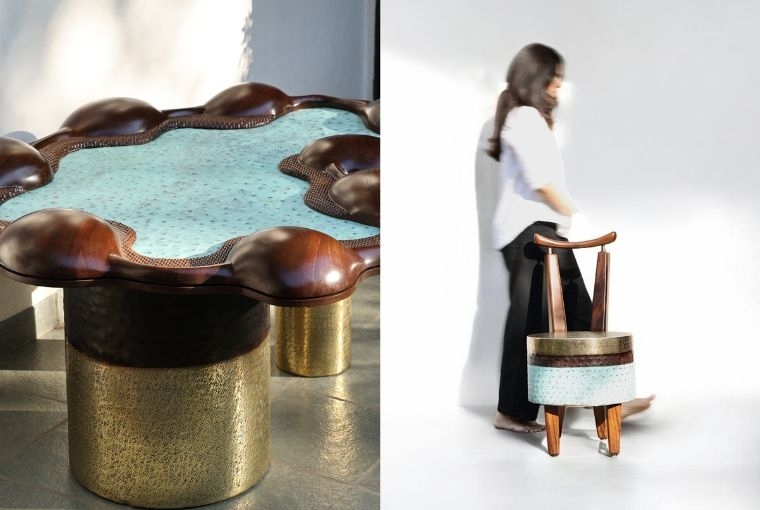
An Intuitive Process
My process begins with intuition. Sometimes it begins with a memory, a rolled carpet, a beautiful sunset, the back of a woven textile. Sometimes it begins with a material itself like brass, wood, marble . I work with textures and patination, surface treatments that allow the material to age visibly. I often use textural layering with materials that hold fragility and density together. The form emerges slowly. I sketch. I build. I observe. The final object is never rushed. It must feel settled.
Tradition and the Contemporary
I don’t see tradition and contemporary as opposites. Tradition is simply time that has settled. Contemporary is time that is unfolding. My work sits between brutalism and memory, between the bare and the ornamental. Architecture trained me to appreciate restraint, proportion, silence. My childhood trained me to respect surface, ritual, aging materials. Blending them feels natural, because both exist within me. When patinated brass meets a minimalist form, it is not a contrast for drama. It is a conversation. Between generations. Between permanence and change.
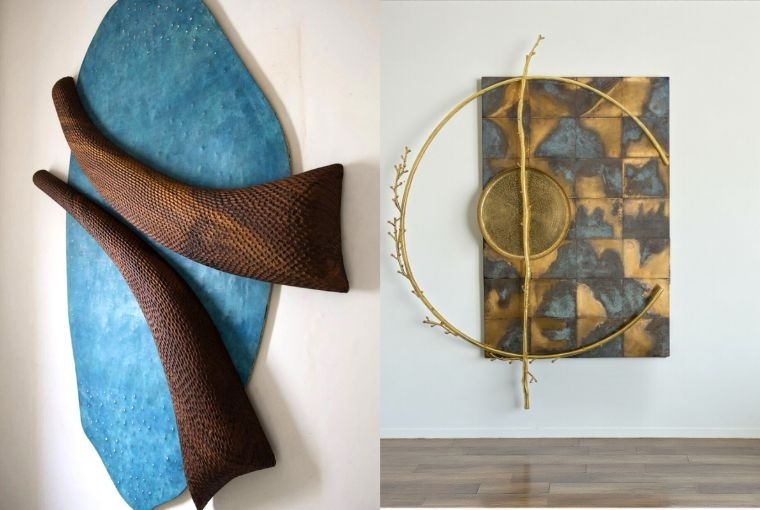
The Value of Human Touch
Human touch is important because material remembers. A machine produces precision. A hand produces presence. The hammer marks, the uneven patina, the slight irregularity in surface, these are not flaws. They are evidence of time, labour, and breath. They make the object alive. In a world increasingly driven by speed and replication, the human touch becomes resistance. It slows the object down. It makes it intimate. And intimacy cannot be mass-produced. In a world dominated by uniformity and mass production, the human touch becomes a radical act of preservation, of uniqueness, time, and material truth.
At the Convergence of Art and Design
I do not separate emotion from function. Architectural design taught me that form must hold space responsibly. Art taught me that form must also hold feeling. When an object exists between art and design, it resists categorization. It does not scream utility. It does not demand interpretation. It simply occupies space with intent. For me, that intersection is freedom. It allows me to create objects that are structured, yet contemplative.
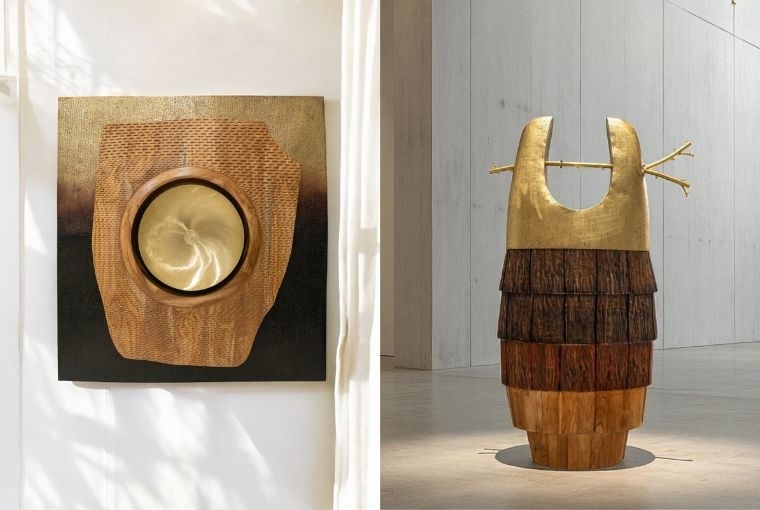
Architecture and its Influence
Architecture gave me discipline in spatial logic, how scale affects emotion, how void becomes as meaningful as form, how restraint can be powerful. But it also taught me something deeper: that the built environment, and the objects within it, influences how we feel, move, remember, and linger. At Art Attaichi, architectural training is the structural backbone, it ensures proportion, balance, and presence, while intuition and material memory allow the work to remain alive, tactile, and soulful. This dialog between structure and spirit is what gives the studio its voice.
Whats Next
I am refining forms to be quieter, slower, more contemplative, letting surface life become the subtle protagonist. The next chapter is not about expansion in size or scale, it is about depth and presence.
Words Neeraja Srinivasan
Date 31.3.2026