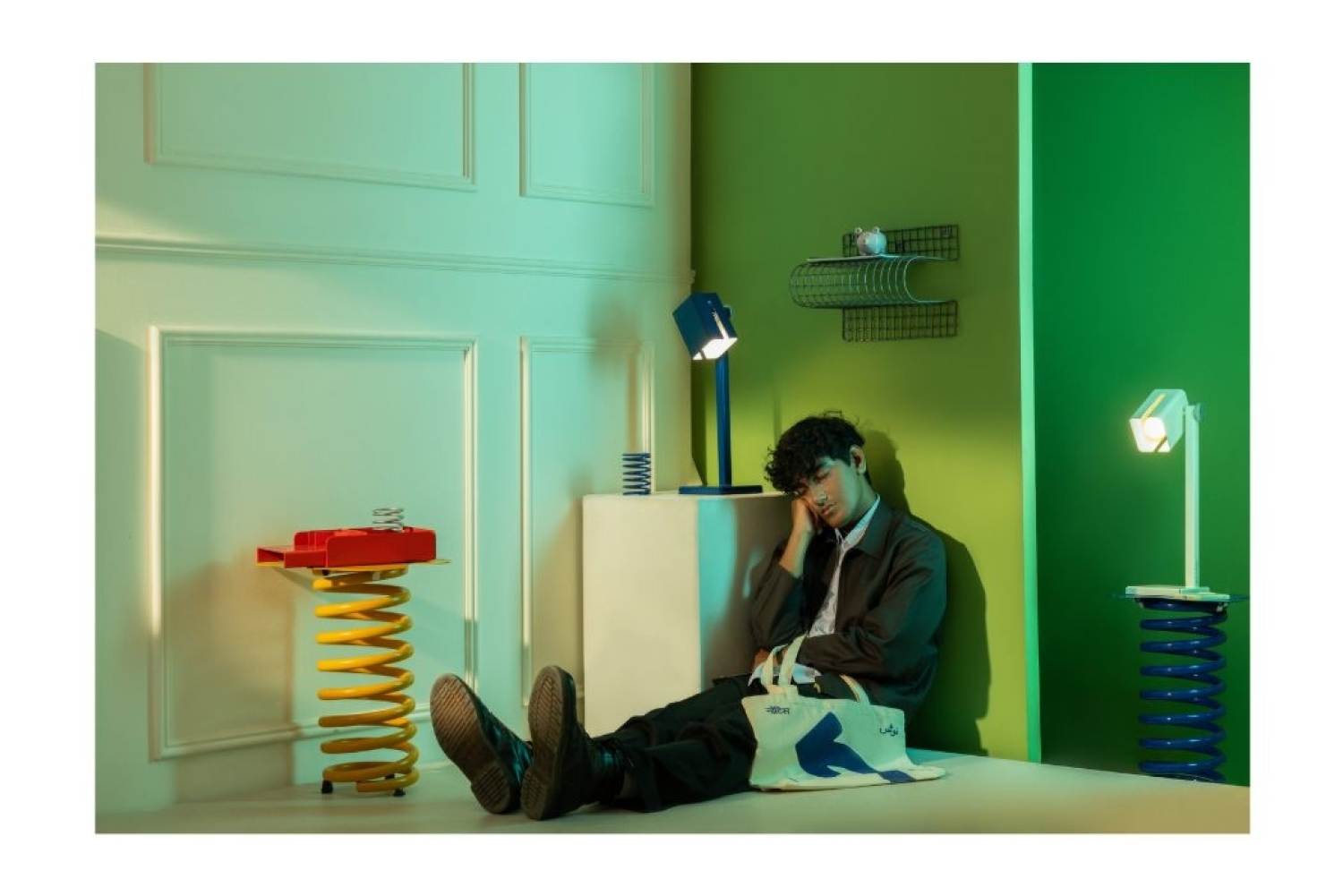
The idea for Notice didn’t start with ‘let’s build a decor brand.’ It came from a much simpler question of wondering if everyday objects could behave a little differently, in the role they play in our surroundings. A side table could look like it has slipped out of an industrial factory rather than sitting quietly, and a pen holder can ‘feel like a fragment of something larger.’ Notice began as a way to question the neutrality of objects, with one important concern at its centre: Why should everything blend in?
Their products come from a desire to create objects that are not ‘very safe, bland and ultimately forgettable,’ but instead ones that have a story behind them. Many of the pieces begin with something familiar, then get reworked until the experience shifts. As they describe it, they ‘take familiar ideas and embed them into unfamiliar formats,’ allowing recognition to remain while the interaction changes. The founders Ayush Sahai, Ojasvi Chauhan, Veetrag Kumar, Vaibhav Sharma and Rishikesh S break it down for us.
The Initial Idea
Ayush and I (Veetrag) grew up in Bombay, surrounded by a constantly evolving streetwear culture, and at the same time, heavily influenced by what we were seeing online from the West. Fashion felt like an obvious outlet; we could express ourselves, experiment, take risks. But that expression stopped at what we wore. Our homes didn’t reflect any of that. We’d see these incredibly curated spaces in TV shows and YouTube videos, but there was always a disconnect when we looked at our own environments. They felt neutral, almost passive.
When we both moved out for college, that gap became harder to ignore. Decorating our rooms wasn’t just an idea anymore, it became a need. And in trying to do that, we kept running into the same frustration; everything felt very safe, bland and ultimately forgettable. We weren’t looking for objects that just fit in. We were looking for objects that had a story behind them.
A Colourful Visual Language
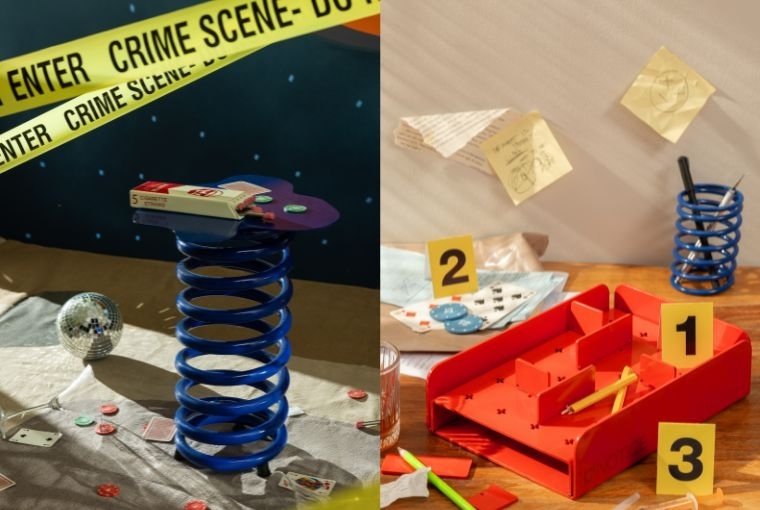
India has always had a deep relationship with colour, it is embedded in our streets, our rituals, our everyday surroundings. But somewhere along the way, especially with the influence of Western minimalism, colour in living spaces started to feel less intentional and more restrained. We are not trying to bring colour back, because it never really left. What we are interested in is changing how it shows up. For us, colour is not about decoration or nostalgia. It is a tool. Our forms tend to be industrial, mechanical, sometimes even a bit cold. If we presented them in a traditionally industrial way, greys, blacks, muted tones, they would feel predictable and heavy.
Colour disrupts that expectation. It adds tension. It makes something that could feel rigid suddenly feel playful, even slightly absurd. So while our forms and references might feel international or rooted in shared pop culture, colour becomes our way of grounding the object differently, without making it overtly Indian in a literal sense.
Avant Garde in Today's Age
‘Avant-garde’ in Indian living spaces is tricky, it can easily become performative. For us, it is not a style. It is a way of thinking. We use it as a lens to move beyond what already exists, to question default behaviours of objects rather than repeat them. It is not about being random or loud for the sake of it. The idea is to be deliberate, but still slightly unexpected. A part of this comes from adapting nostalgia, not by changing the memory itself, but by shifting where and how it exists. We take familiar ideas and embed them into unfamiliar formats. The recognition stays, but the experience changes. We are not interested in placing art objects in a home to signal taste. We are more interested in embedding unfamiliar ideas into familiar formats. The object still needs to function and be story-led, but it carries a disruptive thought within it. If it stops at being interesting to look at, it fails. It has to live with you, be used, and still hold its tension over time.
Storytelling Through Design
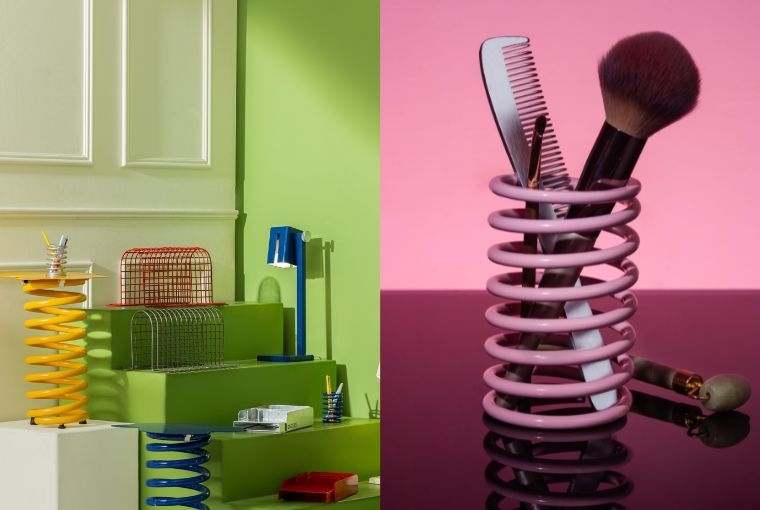
We are interested in stories that come from shared, everyday experiences, things people instantly recognise but have never really questioned or seen reinterpreted in this way. A lot of our work starts from that point of familiarity. Objects, references, or behaviours that feel obvious. But instead of presenting them as they are, we place them in a different context so they can be experienced differently. Alongside that, we are also interested in exploring stories that don’t usually get expressed through objects at all, using forms that feel familiar as a way to make those ideas more accessible. The aim is to build a world where each object feels distinct and holds its own point of view, but can still exist together without feeling disconnected. They shouldn’t look like a uniform set, but they should still feel like they belong to the same system of thinking.
What 'Taking Notice' Really Means
Notice was built on the idea of doing things differently. The left-pointing arrow in our logo represents taking a turn away from what is expected, choosing a path that is less obvious. For us, ‘taking notice’ is about interrupting autopilot. Most objects are designed to disappear into routine, you stop seeing them after a point. Taking notice is about bringing that awareness back, making you look at something familiar with fresh attention. Not in a loud or attention-seeking way, but in a way that quietly shifts how you understand what is already around you.
What's Coming Next
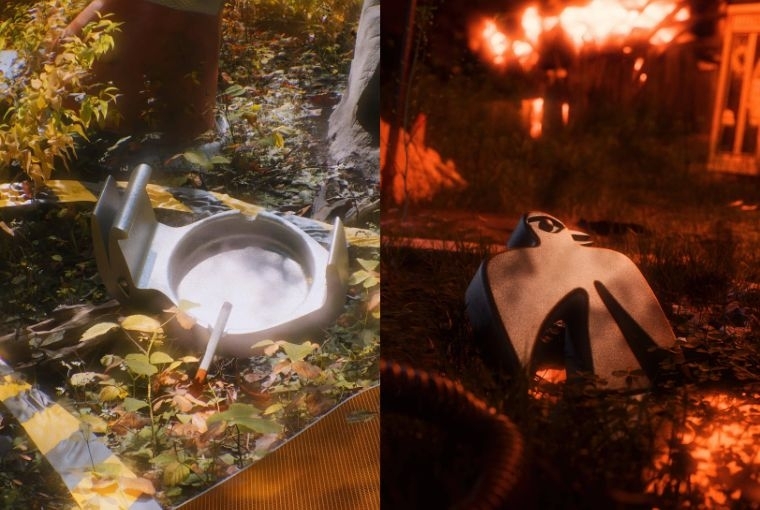
Right now, we’re building a collection that takes a clear left turn from what we’ve done so far. It’s intentionally very different from our current products, pushing the idea of noticing even further. With our last collection, Time Loops, we explored nostalgia by stripping away its baggage and turning it into something more intentional and distilled. This next phase builds on that shift, but moves into a completely new space.
We’re also expanding into a more applied side of the brand, working beyond our own products to design objects, systems, and experiences for others. Not as a traditional service, but as a way to extend our thinking into different contexts and see how it holds up. As we grow, the focus is on evolving without becoming repetitive. Each collection is an opportunity to take a new turn, exploring different ideas while staying rooted in the same core instinct of the brand.
Words Neeraja Srinivasan
Date 8.4.2026