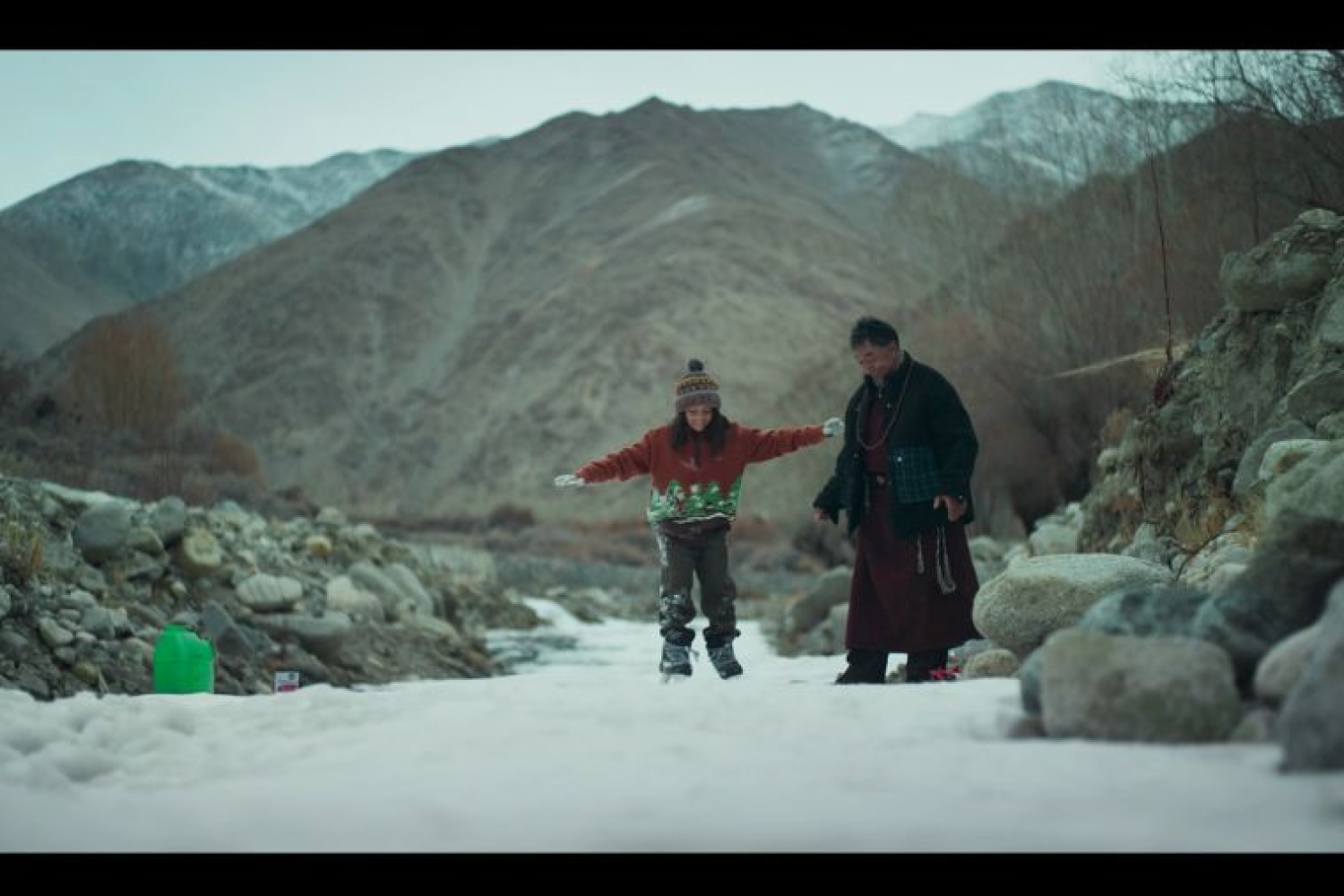
For filmmaker Sahil Shah, Ladakh was never merely a backdrop against which a story could unfold. It became an active presence in his life, a landscape that drew him back with an insistence he did not initially understand. He first travelled there in winter, when the region is largely emptied of visitors and its already severe terrain becomes even more unforgiving. In those months, Ladakh is harsh and breathless, but also marked by a stark beauty that is hard to explain. It was there, on frozen ponds transformed into makeshift rinks, that Sahil first encountered ice hockey.
More than the spectacle of the game, it was the extraordinary labour that mesmerised him.
Each evening, players poured buckets of water over the ice in sub-zero temperatures, preparing the surface for the following morning. They played in borrowed gloves and skates that rarely fit properly, sustaining their passion through an infrastructure built almost entirely out of improvisation, endurance, and collective effort. What compelled them to return to the ice? What did their devotion demand of them? And what became of their aspirations once they stepped beyond the rink? These questions gradually became more than the starting point of a film. They became the reason Sahil kept returning, camera in hand, documenting not only the players but also the families, organisers, and communities that sustained the sport.
Without consciously setting out to do so, he was assembling the emotional and observational foundation of what would eventually become Birds on Ice, his debut feature. The film went on to have its world premiere at the Busan International Film Festival before subsequently screening at DIFF.
Working with writer Shaan Pasricha, Sahil drew on the lives he had encountered to shape an original fictional narrative about Tashi, a young girl whose desire to play hockey becomes a way of articulating something larger: the impulse to claim space, possibility, and belonging in a world that offers her very little of any of them. Shot entirely in Ladakhi, the film is reportedly the first Ladakhi-language feature made in approximately 20 to 25 years.
Sahil is a Mumbai filmmaker telling a story rooted in a place that is not his own and he does not disguise the risks of that position. Instead, he tried to construct the film through collaboration, relying on an almost entirely local cast of non-professional actors, a largely Ladakhi crew, and dialogue translated to resemble everyday speech rather than polished, literary exchanges.
The team now jokes that, with their first film, they had attempted to climb a mountain, an image that captures both the physical ordeal of the production and the uncertainty of making an ambitious film under extreme conditions. We spoke to Sahil, who is hoping for this feature to be a contribution to a broader and still-emerging chorus of stories from the region.
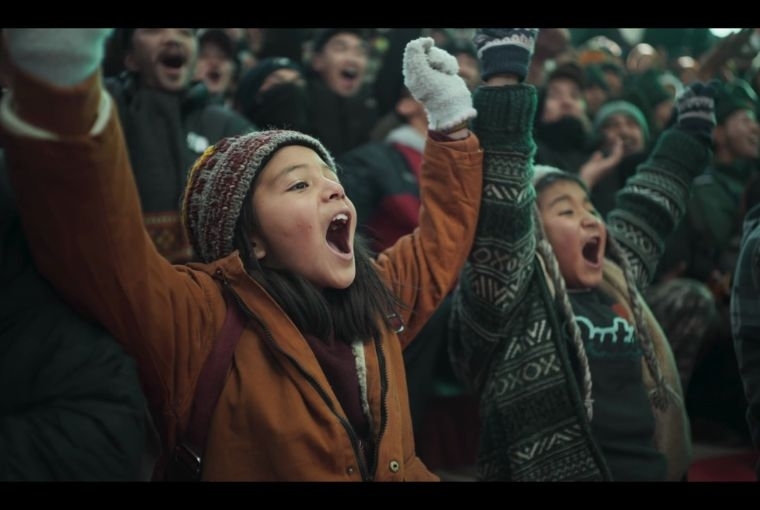
You first went to Ladakh in 2016 for the Chadar Trek, and the film took ten years to reach an audience. What did you see or feel on that first trip that made you want to keep returning and at what point did you realise you were making a film and not just visiting?
My first trip to Chadar was quite interesting because I had actually chosen to visit Ladakh in the winters. Most people usually travel there in the summers, but winter in Ladakh is a completely different game. It’s extremely harsh, but incredibly beautiful. The challenges begin with something as basic as acclimatising and breathing. But the world that opens up in front of you is quite extraordinary. The landscapes, the people, the way they live, the way they adapt to such extreme conditions, I was completely enamoured by it.
And it was during that trip that I first discovered ice hockey. Back then, the game was largely played on frozen ponds. The lakes would freeze over, and these frozen patches would become their playgrounds. What really stayed with me wasn’t just the sport, but the people who played it and what they went through just to play a game they loved. Something as simple as preparing a pond for the next morning required so much effort. Every evening, they would go out with buckets of water and pour it over the ice, in freezing temperatures, to level the surface. The next morning, they would come back and play.
Equipment was another story altogether. Sometimes the skates were too big, the gloves didn’t fit, and a lot of the equipment was borrowed or makeshift. But none of that really stopped them. I think that stayed with me. I wanted to understand what kept these people going. Why did they love this game so much? What did it mean to them? And what were the lives of these players like beyond the rink? That curiosity kept taking me back to Ladakh. Over the years, I continued documenting the players, their lives, and the people who supported the sport. I think I was slowly getting closer to understanding this world. As for when I decided to make a film, I think that happened at a very different stage of my life. I started directing advertisements around 2018, and I’ve been doing that ever since. But I’ve always wanted to tell stories, particularly fictional stories. I think all those years of travelling, exploring India, and documenting different people and worlds had left me with a lot of stories that were waiting to come out. And as I started understanding storytelling better, some of those experiences and worlds began finding their way back to me in the form of stories. I knew that if I were to make my first feature film, it had to be something personal. Something I felt deeply connected to. And when I finally felt ready to take on the long format, which is a completely different world from advertising, this particular world came quite naturally to me. I also felt that I wanted to tell a fictional story from this world.
There have been several documentaries exploring Ladakh, its people and the game of ice hockey. But I felt that fiction could allow me to communicate something different: the emotions, the drama, the inner lives of the players, and what the game actually means to them. And that’s how I found my way to Birds on Ice.
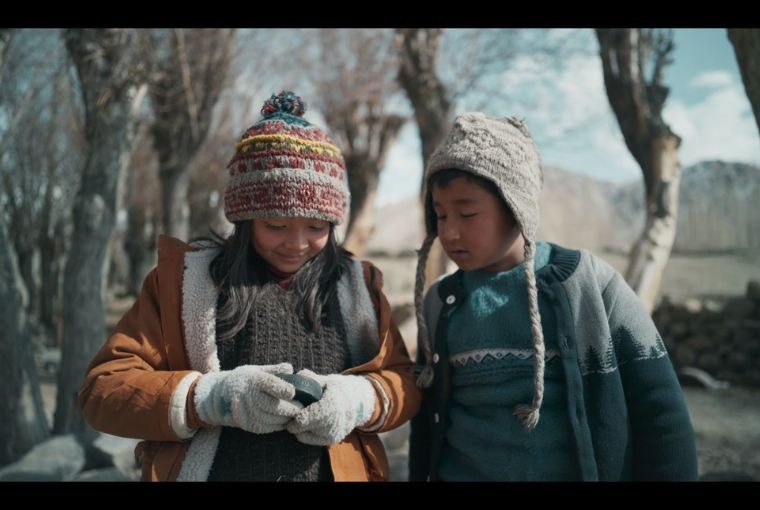
The project began as a documentary idea about Ladakh's ice hockey culture before it became a fictional coming-of-age story. When did you move towards the fictional path?
The documentary footage was initially something I was doing purely out of interest. I never really thought I would take it seriously or eventually turn it into a documentary film. I was simply meeting players, understanding their lives, understanding what the game meant to them, learning about ice hockey, the land it was played in, and how the harsh winters and climate of Ladakh shaped the way they played the sport. I was curious about that world, and I enjoyed documenting it. There wasn’t any larger plan or particular intention behind it. The shift happened when I realised that I wanted to tell a story. I started looking at this world from the perspective of fiction, especially considering the kind of cinema we watch today. I felt it was a refreshing and fascinating world to explore through a fictional narrative. Ladakh itself hadn’t been explored much in cinema, particularly in its own language. The last Ladakhi-language film had been made almost 20–25 years ago, and ice hockey was an even less explored subject.
So, when I felt I was ready to tell a story, I decided to take it forward. The years of documentation gave me an incredible foundation. Of course, the story we eventually developed was very different from the actual lives I had documented, but it was deeply influenced by their experiences and the world they inhabited. When I briefed Shan Pasricha, the writer of the film, we spent time exploring this world together. We borrowed from the experiences of the people I had met, their stories and their relationship with the sport. But what we eventually created was a completely original fictional narrative. I think the biggest advantage of moving into fiction was the opportunity to take a very specific world and tell a story that could travel beyond it. I strongly believe that stories from any part of the world can resonate with audiences everywhere, particularly when they are rooted in universal emotions. Fiction, in that sense, allows you to connect with a much wider audience emotionally.
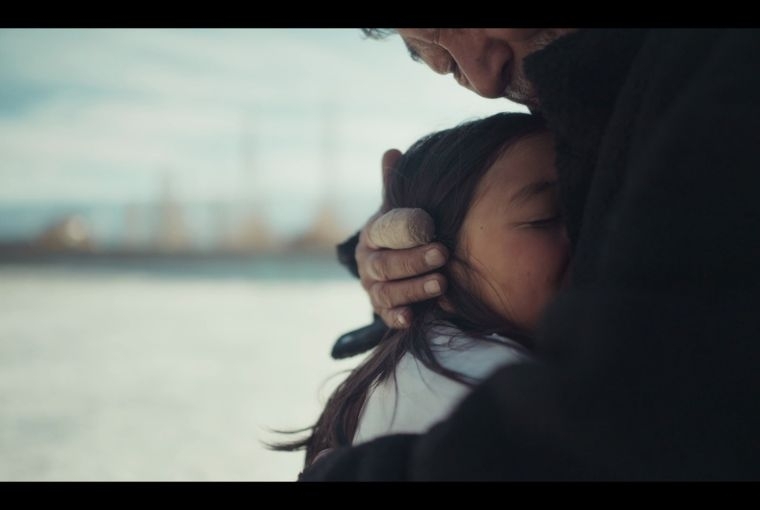
Tashi is a young girl living with her grandfather who dreams of playing a sport that hardly anyone around her thinks of as a future. What was the starting point for the story?
I think, for me, it came from a very personal place. I’m a Mumbai boy. I’ve lived here all my life, and my roots are very much here. So, when I started telling a story set in Ladakh, a land I don’t come from, I felt it was important to bring something of my own into the film. Something that answered the question of why I wanted to tell this story in the first place. I’ve always been very close to sport. And like most children, there came a point when I realised that perhaps I wasn’t good enough to pursue it professionally. But that never took away my love for the game or the desire to keep playing. I think that feeling stayed with me. And I guess that emotion goes beyond sport. It could be art, music, or anything you deeply want to pursue. It’s really about how badly you want something, and how far you’re willing to go for it.
I think that’s where the child’s point of view became important. Childhood is such a beautiful, uncomplicated phase of life. You dream without really thinking about the obstacles. You don’t necessarily think about what the world will say, whether people believe in you, or whether something is even possible. You just want to do it. And I found that purity very beautiful. Tashi’s desire to play ice hockey comes from such an innocent and honest place. She isn’t trying to prove anything to the world. She simply loves the game and wants to get on the ice. Of course, Sean, our writer, brought her own sensibilities and personal experiences into the story as well. And I think that’s what makes storytelling interesting. Even if you don’t come from the same land or share the same experiences as your characters, there are emotions that are universal.
For me, Tashi’s story was ultimately about that innocence of dreaming, that stubborn hope, and the courage to keep wanting something even when the world around you doesn’t necessarily see it as a possibility.
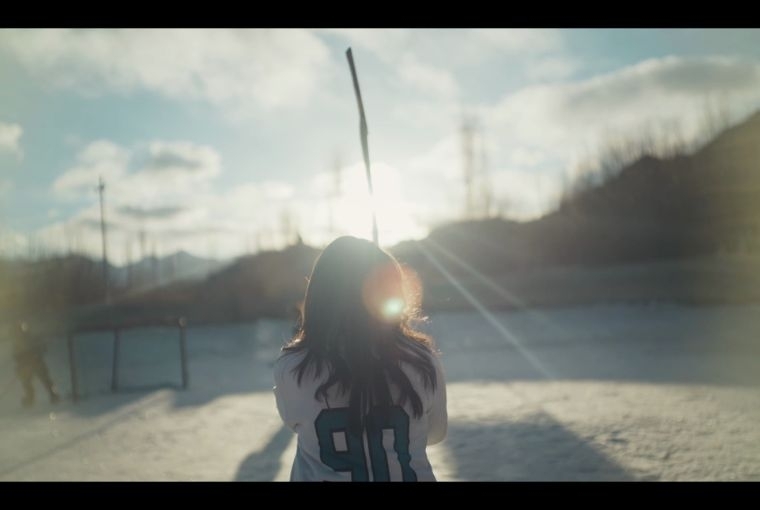
You've said you didn't want Birds on Ice to become a tourist postcard of Ladakh, and you weren't telling a story from a place you already knew. What specific choices in the casting, the language, the locations and the camera kept you from the outsider's gaze?
I didn’t want Ladakh to become just another tourist postcard. I think it’s very easy for an outsider coming into Ladakh, especially as a filmmaker, to get completely enamoured by the beauty of the land. You see the mountains, the vast landscapes, the Himalayas, the snowfall, and it’s almost instinctive to keep capturing them. We’ve seen that happen in several Indian films over the years. Ladakh has often been used as a backdrop for songs, war sequences, or simply as a place to showcase spectacular landscapes. And while there’s absolutely nothing wrong with that, I felt there was so much more to explore. We were very clear that we wanted to focus on the characters and their emotions. At its heart, this was a story about the people of Ladakh, more than anything else. One of the first decisions we made was to shoot the film in Ladakhi. We didn’t want to be tempted by the idea of making it in Hindi just to reach a wider audience or make it more accessible. We strongly felt that when people in Ladakh speak to each other, they speak in their own language. And more importantly, that’s where their emotions naturally come from. That’s how they express themselves. So, for us, making the film in Ladakhi was non-negotiable. The second important decision was to involve the local community in the filmmaking process. Almost our entire cast and a large part of our crew came from Ladakh. We had around 20 people who travelled from Bombay, Delhi and other parts of the country, but the real heavy lifting was done by the locals. The cast was predominantly local, as were the crew members. In fact, many of our crew members helped us discover and cast people from the region. We held multiple auditions, meeting people who came from different walks of life but were excited to be part of the film. Now, having said that, I’m also conscious of the fact that I’m an outsider. I’m not Ladakhi.
And perhaps a filmmaker from Ladakh would tell a completely different story, one that could be equally, if not more, interesting. But what gave me the confidence to tell this story was the trust that the cast and crew placed in us. They believed in the subject, they connected with what we were trying to do, and they trusted us enough to come on board and make this film together. In many ways, that was an important validation for me that perhaps we were approaching their world with the sensitivity it deserved. I would still call this an outsider’s perspective. It’s my interpretation of the people, the land and the world that I encountered over the years. And I hope it’s one voice among many. Because I genuinely hope more stories emerge from Ladakh, told by filmmakers who belong to the land themselves. I hope more filmmakers from the region find their own voice, their own originality, and tell stories that come from their lived experiences. I think we need more such voices. Ladakh deserves to be seen not just for its landscapes, but for its people, their lives, their dreams and their stories.
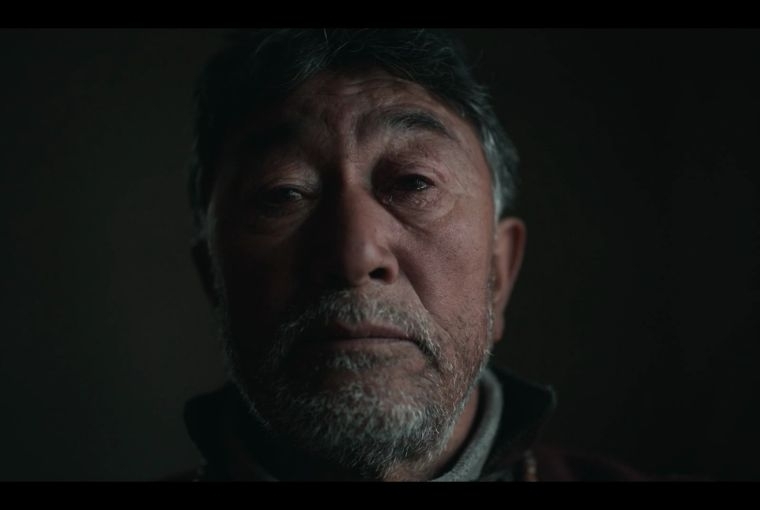
The film marks a return for independent Ladakhi-language fiction after nearly two decades. Did that history weigh on you as a filmmaker from Mumbai?
I wasn’t even aware that there hadn’t been a Ladakhi film made in the last 20– 25 years. I only got to know about it much later, when we organised a small screening for our cast and crew and someone pointed it out to me. But honestly, I never felt any pressure because of that. The only thing I felt was a strong sense of responsibility. Since this was a world I didn’t belong to, and one that was completely alien to me in many ways, I wanted to make sure I did absolute justice to it.
Whether it was the language, the emotions, the music, the performances, or even the way our crew interacted with people on the ground, I wanted everything to feel honest and authentic. We had built a certain level of trust with the people there, and they had trusted me with telling a story from their world. I wanted to make sure that what eventually went out there honoured that trust.
Our local crew was a massive part of making that happen. Two of our primary collaborators, Omer Lasso and Tenzing Jumphel, were filmmakers themselves and also worked as our line producers. That was one of the reasons we chose to collaborate with them. They understood filmmaking, but they also had a very strong understanding of the local ecosystem and how things worked on the ground.
We trusted them with a lot of the creative decisions, including casting. They helped us find the right people for the characters, and also played a huge role in production design and building the world of the film. For instance, what would Tashi’s house look like? What would Norbu’s house look like? What would their homes have in them? What would a little shop selling milk look like? What would the ice hockey rink look like? What kind of equipment would people actually use?
These may seem like small details, but they really add up when you’re building a believable world on screen. So, in many ways, the local collaborators weren’t just helping us execute the film. They were helping us understand the world we were trying to portray. And that contribution was absolutely invaluable.
You've spoken about the challenges of filming in Ladakh's harsh winter conditions. Can you take me through one day on the ice that went badly or surprisingly well?
Shooting in Ladakh was, I mean, a mixed bag. On one hand, there was so much beauty around us. The landscape was absolutely stunning. You could point a camera in almost any direction and come away with an outstanding frame. But the conditions were incredibly challenging. Everything, food to accommodation, came with its own set of difficulties. Not many hotels had central heating systems, so one of our biggest responsibilities was simply to make sure the crew was comfortable, intact and warm, especially when they returned to their rooms after a long day of shooting. Even on set, managing food was a challenge. We had to find ways to keep it warm in freezing temperatures. Water would literally freeze if you didn’t have the right kind of bottles. And then there were the cameras. Batteries would drain very quickly in the cold, so even something as basic as managing equipment became a task. Srijan Chaurasiya, our DOP, has done a fantastic job with the film. But getting those frames wasn’t easy. There were several locations where we had to hike considerable distances to get a particular shot, carrying cameras, lighting equipment and everything else. Imagine doing all of that with the entire crew moving together, everyone wearing five or six layers of clothing, carrying heavy equipment and bags, and then having to manage children and animals on top of it. So, yes, it was a hell of a challenge.
What’s interesting is that for most of us, this was our first feature film experience. And now we have this running joke that we’ve literally climbed a mountain with our first film, and a pretty difficult one at that. So hopefully, every film we make after this will feel a little easier! But the conditions were genuinely tough. Just to give you an idea, we went to Ladakh as a team of 20 people from Bombay. By the time we wrapped up after a couple of months of shooting, only seven of us returned together. People fell sick, and one of our costume stylists slipped on the ice and suffered four fractures. So it was physically and mentally demanding for everyone. I think what really kept us going was the energy of the children. Their enthusiasm was infectious. The local crew was also an incredible support system. They helped us in every possible way and, more than anything, made us feel welcome and looked after. There was just so much warmth coming from the people around us, even in those freezing conditions.
At the end of the day, we knew we had a story to tell. We knew how much we wanted to make this film, and I think that determination carried us through. But yes, we came back with some absolutely crazy stories!
Words Hansika Lohani
Date 12.11.2026