Fifteen schools in twelve years will teach a child plenty about being the new kid. For Aastha Tiku, it taught her how to look. Shuttling between remote towns in North India, the Northeast and the South, she grew into a watcher. She never quite belonged anywhere and eventually made peace with it. That outsider's eye still shapes the stories she is drawn to tell.
Cinema found her in layers. First came the technicolour joy of The Wizard of Oz and Mary Poppins. Then came the band years and a hunger for music on screen, from The Doors to Ken Russell's Tommy and Lisztomania, along with dreams of making videos in the spirit of Michel Gondry and Spike Jonze. Philosophy and psychology in college added a third layer, and with it a fascination with how a book becomes a film. That curiosity led her to screenwriting and to Sherni with Amit Masurkar, a collaboration that has now grown into a production house of their own.
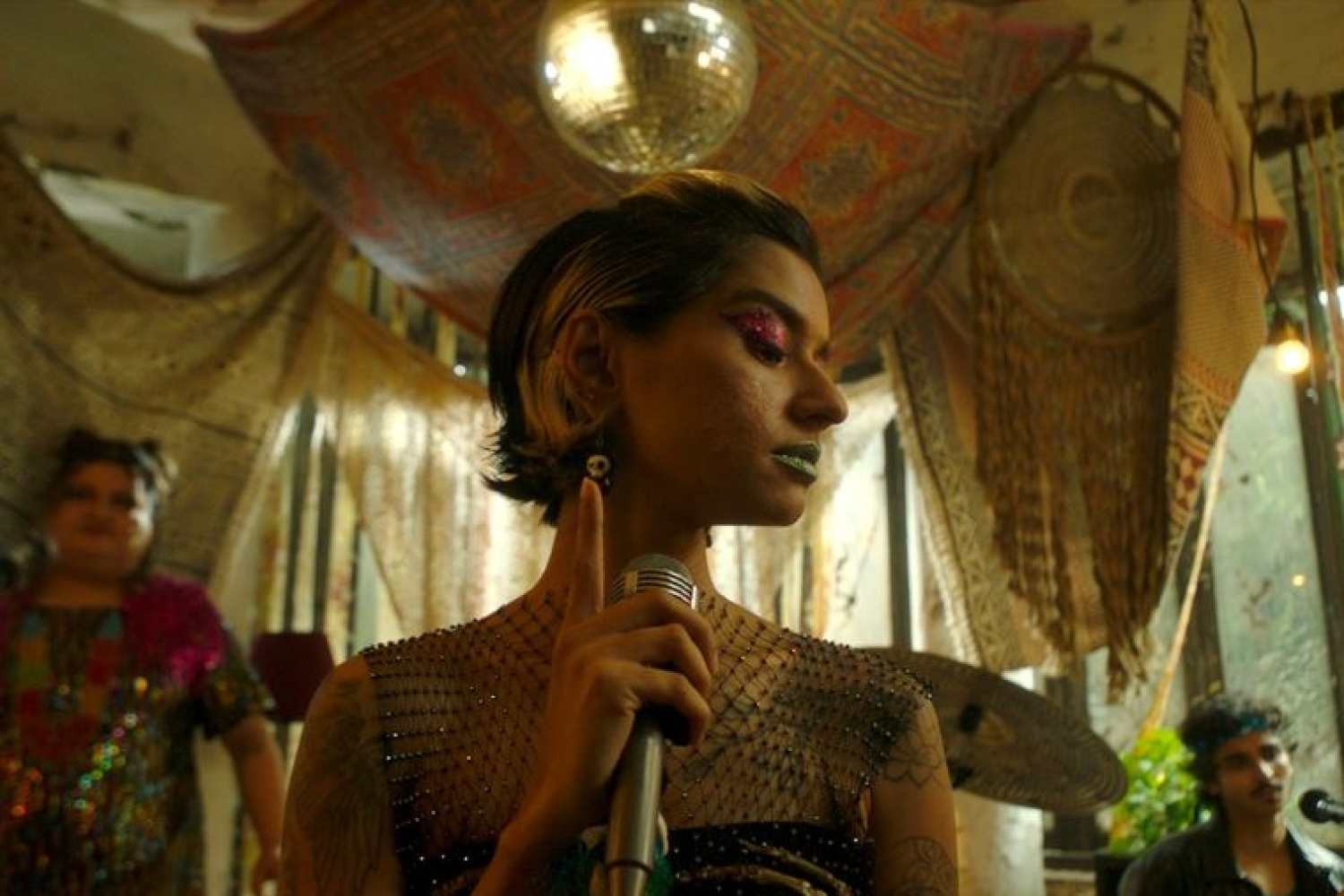
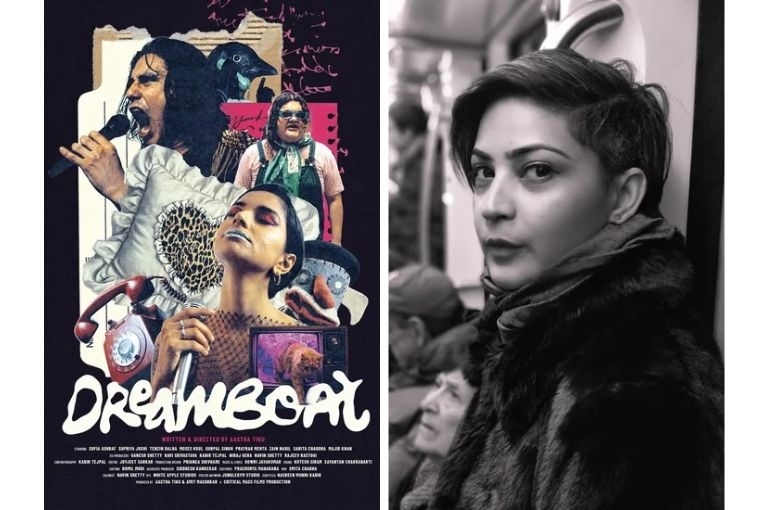
Dreamboat is where Aastha Tiku finally steps behind the camera. The 24-minute fantasy comedy began as a dream she woke up and scribbled down before it faded. It holds a girl, her imaginary boyfriend, a talking crow and a puppet, all set in a night-drenched city of punk and camp. Sofia Ashraf leads a cast that includes Supriya Joshi, Tenzin Dalha and Prayrak Mehta. The film had its world premiere at the Dharamshala International Film Festival which marks the beginning of its festival journey. We spoke to Aastha about displacement, dreams and the counterculture that raised her.
The Contradictions Within Us
I'm particularly interested in the rich inner worlds of people and the contradictions that make up the human experience. Themes of individuation, existential angst and the sense of emptiness or void we sometimes experience fascinate me. I find the need to fit in, the desire for popularity and the anxieties surrounding social acceptance equally interesting. I'm also drawn to exploring hierarchies and power structures within society, and how they shape our identities and relationships.
Deciphering the Dream
I find the visual language of the subconscious fascinating. I remember waking up one morning and immediately jotting down everything I could recall before the dream began to fade. I had been developing the idea of a girl and her imaginary boyfriend, but the talking crow and the puppet were simply too bizarre and intriguing to dismiss casually. I suppose art, particularly the visual arts, and cinema by extension, allows us to explore aspects of the human experience that cannot be articulated through any other medium. So, over the next few months, I immersed myself in deciphering the dream, gradually weaving its symbols, atmosphere and sensory experiences into the world of the film.
From the Page to the Director's Chair
Screenwriting is a very visual form of storytelling, and while writing Dreamboat, I could see the film in my head long before I put it down on paper. So I decided to take the plunge and direct something shorter, as I felt I brought a certain honesty and specificity to the material that might be difficult to convey to another director. Being an indie film came with its own set of challenges and advantages. I had complete creative freedom over casting, production design, music and costumes, and got to work with people I really trusted. At the same time, the limited budget meant we had to be very prepared. Almost the entire film was set at night, and we happened to shoot during peak monsoon, with torrential downpours adding to the chaos. It was a challenging experience, but also one that allowed me to find creative solutions and make the film on my own terms.
A Producer Drawn to the Fever Dream
Amit directed the feature SHERNI, on human-animal conflict, which I wrote. After that we worked on multiple scripts, and a series that we’re producing. We started a production house to develop material that we wanted to make. So we rotated some money made from other projects into this one. He was drawn to the story's fever-dream quality and its immersive, experiential nature, and was curious to see how it would translate to the screen.
Punk, Camp and the Urban Underground
I grew up watching campy movies and have always been drawn to punk, alternative music and aesthetics. I've always enjoyed engaging with counterculture and anything that challenges or subverts the norm. With this film, I wanted to bring some of that spirit into the narrative and capture the culture and subcultures that exist within urban cities, something I feel we're seeing less and less of in cinema today. I wanted to make a film that felt rooted in these worlds and reflected an urban experience I could relate to. I want audiences to find fragments of themselves in the films I make.
Words Hansika Lohani
Date 24.11.2026