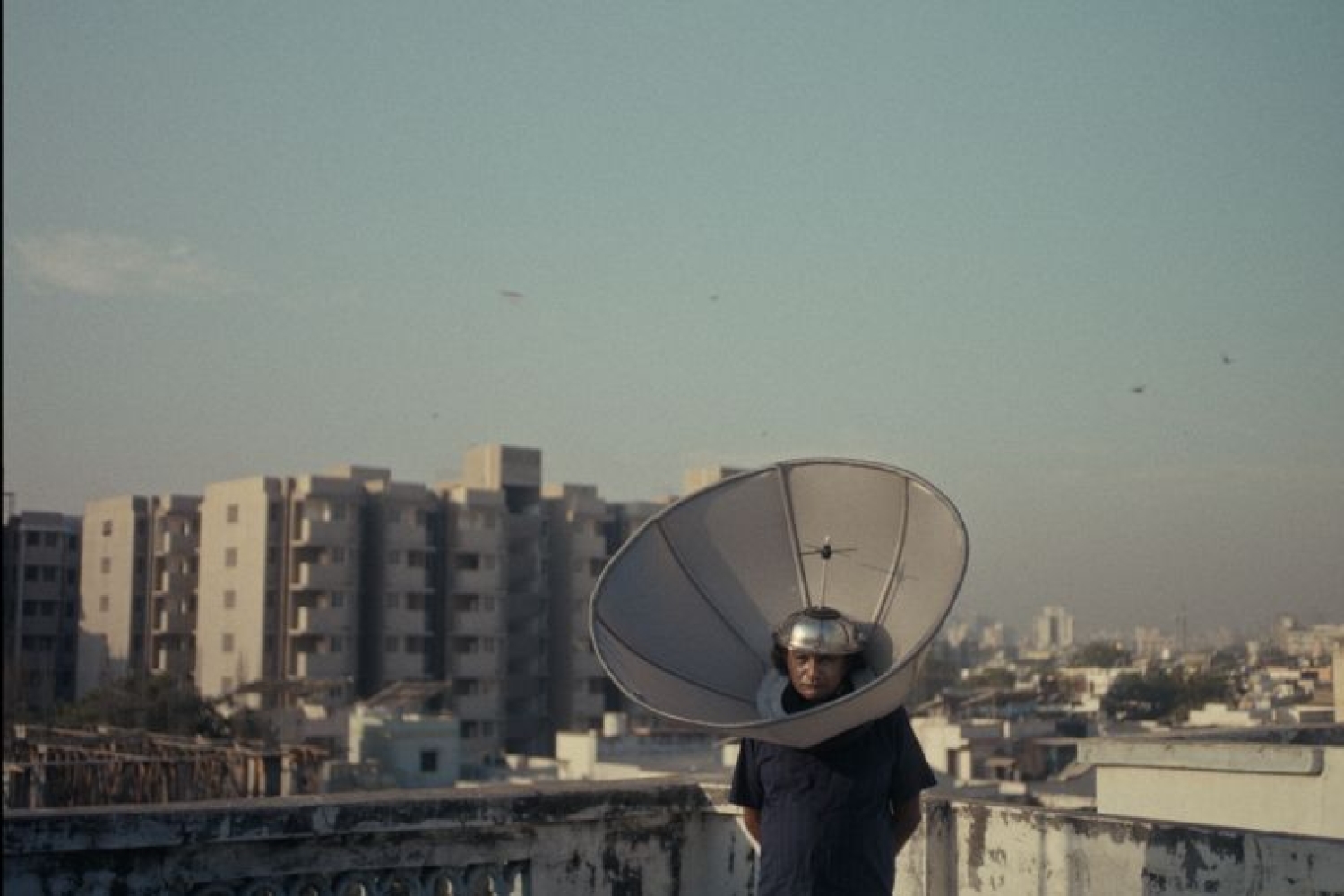
Three retired men in a crumbling Indian town stage a protest against machines taking over human jobs by pretending to be household appliances. It sounds like a punchline because it is one. It has also become one of the most talked-about Indian short films in recent memory. Pranav Bhasin’s We Were Here, a mockumentary of about ten minutes, has played at more than 80 international festivals and collected more than 20 awards. It is Oscar-qualified. It won the Grand Jury Prize at the Ouray International Film Festival and took the Audience Award at SXSW, which is a first for an Indian short film in that festival’s history. Also, The New Yorker acquired the film and has posted it on its official YouTube channel, where anyone can now watch it.
The film’s backers are just as striking. Actor Andrew Scott came aboard as executive producer after watching it at SXSW. Priyanka Chopra Jonas joined later as executive producer after the film reached her and she responded within hours. For a small comedy about three uncles taking on AI, the film has gathered an unusual amount of support. An Oscar campaign is now underway.
Pranav grew up in Goregaon in Mumbai and says the city shaped how he sees the world. ‘I saw a lot of dichotomy on the streets. We live in a city which is so fast-paced and so modern and yet the streets are broken and the people are very often impoverished but they would not stop. And there’s a lot of camaraderie and love amongst people. It’s still among the safest cities in the country. That spirit has definitely played a role in the way that I perceive the world and how I tell my stories.’
The early signs of a storyteller were there in junior college when he spent all his time making movies with friends. ‘I would be going into their houses with actors and my so-called makeup artist who was just another school friend,’ he recalls. In 2011 he made a seven-episode show with friends from his colony and football class. Each episode ran 20 to 25 minutes and the show went up on YouTube. It was a rip-off of Supernatural. ‘I made it without having any motive in mind but just because I wanted to make stuff,’ he says. ‘I didn’t realize that I want to pick this up until much later. I just kept doing it as something I love.’ He is still working it out. We spoke to Pranav about where We Were Here came from and now what the Oscar race looks like from where he stands.
Uncles Fighting Back Against AI
The starting point was simple. Pranav was chuckling at the idea of fighting back against AI at a time when its arrival felt inevitable. ‘Everybody felt like they were just coming to accept the fact that they were going to get replaced, that they had no choice,’ he says. ‘That felt very sorrowful and sad in many ways.’ What he first saw was an image of a man standing on a rooftop and shouting ‘Robo, go back!’ ‘I just loved his spite. I loved his courage,’ Pranav says. ‘Initially I just thought it’s funny. But the more I wrote about him, I found a story of friendship. Then I found the story of the repercussions of fighting back against something and whether it’s worth it or not. And eventually, what makes us human.’
Finding the Story While Writing It
The idea, he admits, was ridiculous at the start and he discovered the film’s depth the way the audience does. ‘I wasn’t predetermining it. I was finding why I was telling the story while I was writing it,’ he says. ‘In many ways, I changed in the process of writing it.’ At first he thought it might be absurd to take a stand and be assertive about what you want in this situation. ‘But towards the end, I found the relevance in fighting back and in having a voice. Why do we need to make a mark in this world? What makes us exist?’
The Absurdity of How We Express Love
Pranav says he is drawn to the gaps in human existence. ‘There’s so much absurdity in the way that we exist with each other,’ he says before conceding that this might be too broad. The film itself offers examples. A father cannot express love for his son in any way other than struggling to accept him for being gay and polyamorous. The son, unable to say anything to his father, sends a robot back to make him feel better. One uncle and his wife started as lovers but now live together without really communicating. He does his own thing and she rebels by using appliances in an electronics store. ‘The way we express ourselves is very, very fascinating to me,’ Pranav says. ‘I think our existence is very absurdist and dysfunctional. And I like talking about that.’
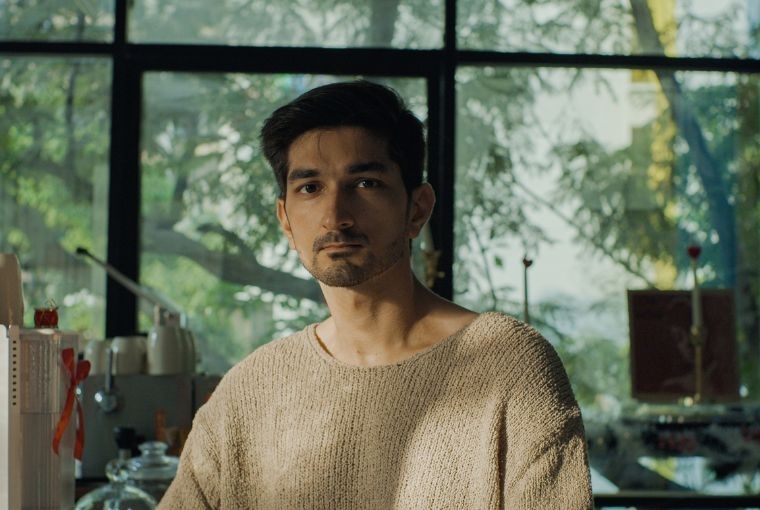
Pranav Bhasin
Casting Three Uncles Across Three Corners of the Map
Casting was led by casting director Sumit, whom Pranav has worked with for a while. ‘He just gets it in terms of finding the tone, which is committed. We look for something that is authentic,’ Pranav says. He says he did not think of them as uncles but as retired people and asked what that would feel like. ‘It was coming from a place of empathy.’
After hundreds of auditions, he found a self-tape from a man in Australia. ‘It turned out to be Mr. Satish, who had this great spite in him while he was saying his lines. There’s so much grit and so much expressiveness that I felt like he had to be the person we build our casting around.’ The budget did not stretch to flying him down but things worked out through collective decision-making with his producer and with Satish himself. The team had hoped to find everyone near the shooting location since that would have been the most economical option. Instead they cast Devendra from a corner of Maharashtra and Arindol from Calcutta. Satish flew in from Australia. ‘It was a lot of miracles really that happened to get everybody together.’
What surprised him was how well they fit. ‘Even individually, in their self-tapes, they just seemed like they would seamlessly fit together and seem like friends. Fortunately, that’s how it has turned out on screen as well. There’s something about the collective energy of people that is irreplaceable.’
How Andrew Scott and Priyanka Chopra Jonas Came Aboard
Pranav says both executive producers are inspiring artists and he is deeply moved that they are on the film. They arrived at very different points in its journey. Andrew Scott came on at the film’s North American premiere at SXSW in Austin. He watched it there and chose it as part of the Redbreast Unhidden program, in which five films from the SXSW selection are picked for his support. The winner among them gets a prize and Andrew as executive producer. ‘He was such a gentle and kind and generous person. I was very surprised by how open he was and how giving he was towards the film,’ Pranav says. ‘He’s been encouraging despite his current run with Elsinore in the U.S.’
With Priyanka Chopra Jonas it took some effort. ‘It’s a little hard to explain but after a lot of pushing and pulling we were able to find a way to get the film to reach her,’ he says. She opened the film and watched it. Within a few hours the team heard back. On a call she spoke about how she felt about it. ‘She immediately got it. She got all the layers and depth of the film. She got the humour of the film. It felt like she was immediately in sync and she wanted to support us through her platform.’ They have been in touch ever since and are looking for ways to get the film to wider audiences. ‘We’re very excited to collaborate on other things in the future. I feel very honoured to have that opportunity.’
To AI or Not To
Pranav is careful not to make the film a manifesto. ‘I do hope that technological progress continues for humanity because it’s very important for us to get healthier and to go where we want to go as a species,’ he says. His hope is for people who feel afraid of the change AI is bringing, who feel lost or confused and can’t express it. ‘I hope they get to see this film and find some tools from it, some dialogues, some visuals, that make it easier to open a conversation about this.’
‘This film is not pro or anti AI,’ he says. ‘It is not a commentary on what is right and what is wrong. It is purely urging us to open up a conversation about why it matters to include human connection and our existence in the conversation about AI, because AI is meant to be only a tool and nothing beyond that. It must remain a tool for us to improve our lives and make our lives better. It’s not supposed to ruin our lives.’
The Oscar Campaign and What Comes Next
A few months ago, Pranav thought the festival run might be the end of the film’s life. The Oscar qualification changed that. ‘I quickly realized it’s really just a beginning,’ he says. He points to the SXSW Audience Award as part of the same push. The campaign is new territory for him. ‘As a filmmaker from Mumbai, I’m usually focused on making my movie, getting it seen by people and writing the next thing,’ he says. ‘But the campaign is showing me how far we have to go after making a movie for it to be seen. It takes a village to make a movie but it probably takes a small-sized town to get it shown and distributed. That’s what I’m currently learning.’ Even so, he holds to a principle. ‘You should never be making movies for anything but the part of you that wants to make movies and enjoys it.’
The next few months will be spent travelling with the film to show it to Academy members and critics in the hope of starting conversations and winning votes toward a nomination and beyond. After that, he has features lined up. One is an independent film set in Bombay that he has been developing and co-writing with his partner for a couple of years. ‘It’s a challenging project in many different ways and I would expect myself to take a silent retreat after the Oscars before I actually start filming that one,’ he says. He is also preparing high-concept features that need more resources. ‘I’m just preparing to find the right kind of collaborators for that. Hopefully the campaign enables me to meet those people as well.’
Words Hansika Lohani
Date 17.11.2026