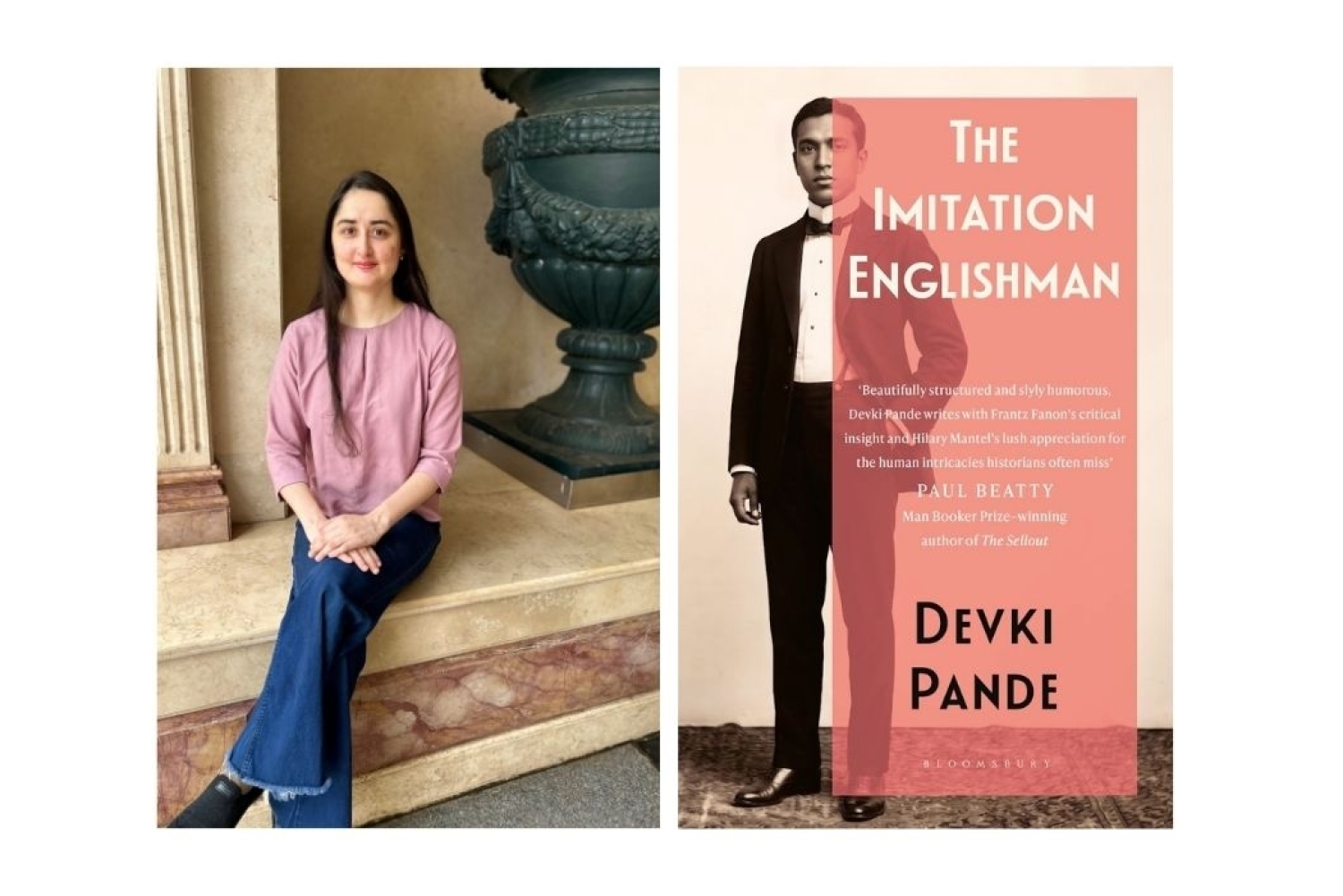
All her life, Devki Pandey has heard snippets of her great-grandfather and how he studied law abroad; it was so embedded within the lore of her family. What really caught her attention was when she learnt that this was in 1916, amidst the First World War. Her interest was doubled when she learned that he had been only 21 years of age. The sheer guts it would have required in order to undertake such a journey, for someone who had never even left his town, was incredible to her. First hashed out as a short story in graduate school, the centre of The Imitation Gentleman, her debut novel, revolves around a young Indian clerk who travels to Heidelberg to study law, only to find himself drawn into the Hindu-German Conspiracy, a gun-running plot for Indian independence that takes him from Germany to London. It is a facet of Indian history that has never really been explored in fiction before.
The Research Process
The anchor points of the novel: Madhusudan setting off to Germany, then going to London, a cousin who studies history; they were drawn out of family history.
To understand the world and the time, the very first book I picked up was Our Friend “The Enemy”: Elite Education in Britain and Germany Before World War I by Thomas Weber, which was about Oxford and Heidelberg University up to the first world war. A couple of other books about the legacy of Indians in Britain. Asians in Britain by Rozina Visram was particularly riveting.
I also made a study of Indian soldiers during the first world war, including the prisoners of war, and how they would have restarted their lives in London. I was fortunate enough to receive a grant to go to Heidelberg, which was extremely helpful in getting a sense of place. I remember just walking and cycling around, using what stood out to me as a metric for what Madhusudan would have noticed.
Surprises While Researching the Hindu-German Conspiracy
The scale of it. It’s not a very well known movement, although Bose was inspired by it, but when I started reading about this movement in an organised manner, I realised that it has everything; court trials, spies, epic battles, student recruitment, planned assassination attempts, all against a burgeoning call for Indian freedom. It’s truly the stuff of an epic saga, and I was shocked that no one had tackled it before in fiction.
Colonialism and Racism
The way I structured Madhusudan’s experiences in London, I wanted every chapter to be an ethnographic portrait of an imitation Englishman. As a student of law at Axton, despite all his difficulties, Madhusudan belongs to a privileged class of Indians in London, even though it doesn’t feel like it. But there were other Indians there as well, who did not have his opportunities. The lascars, the Indian soldiers, plus those who had moved to Britain in the 1800s; all of them had such different migration stories. The idea of how they would have interacted with each other, while trying to consciously or subconsciously adhere to a standard of anglicisation was fascinating to me.
What Lies Ahead
There’s supposed to be a second part to The Imitation Englishman. The first part was and is about a boy leaving on a journey and the second part is the man returning home. And then there’s a novel set in Mumbai as well, around real estate and land and politics.
Words Neeraja Srinivasan
Date 1.9.2026